“My brain understands what my heart doesn’t.”
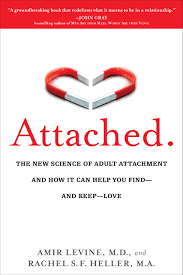
Attached by Amir Levine and Rachel Heller – Paperback Version & Hardcover Version
Writing: ✭✭✭✭✭✭✭ (7/7)
Utility: ✭✭✭✭✭✭✭ (7/7)
🚀 The Book in 3 Sentences
- As humans, we come preassembled. From decades of emotional wiring, stemming from the way we are raised by our parents, we become predisposed towards certain types of affection. How each of us defines love is an aggregation of our own experiences.
- Whether we like it or not, not all relationships are truly meant to be — two people who love in vastly different ways can cause an explosive reaction, ending in both parties scarred and hurt.
- Attachment theory posits that there are three attachment types: anxious, avoidant, and secure. Certain combinations of those three attachment types are the most predisposed for leading a healthy relationship.
🎨 Impressions
- My number one book of all time — for someone who struggled intensely with my first relationship — it changed my life so so so much. If I could, I would give it a 10.
- 7/7 utility and readability.
Who Should Read It?
- Everyone. Most, if not all, of us, will likely find ourselves in a relationship at some point in our life. This book is a relationship bible: learn to pick the right person (for you) and how to mend a relationship that feels like it’s falling apart.
☘️ How the Book Changed Me
- Helped me fall in love with psychology. It’s hard to explain all the different things this book was able to adequately capture in just 170 pages, but, for one, it helped me realize that many of our actions are strongly driven by emotions — which we rarely have complete control over. It teaches how to take advantage of the good and bad parts of the dinosaur brain buried deep in our heads. It was my first taste of real psychology, and that’s made me explore so much more since — it really has changed my life.
- Taught me that your compatibility with someone as a significant other has nothing to do with your underlying self-worth. I used to measure my self-worth with who I dated and the fact that they chose me. I thought — they must be dating me because I’m better than the competition. And on the flip side; if my relationship was failing, I thought it was because I was no longer good enough. I told myself it was because the traits I once held were slowly disappearing, when they were in reality, not. It was a vicious cycle of self-hatred. The book made me realize that compatibility is much more about how we love and deliver affection than any other artificial cover of “value” or “worth.”
- Explained why we act and react in ways that are irrational. In my first relationship, I overthought, a lot. It was hard. I cried more than I ever have in my entire life in a span of one week. I felt like a victim of the wrath of the world: “why me?” I’d ask. It was so hard to communicate how I felt because I didn’t even really know how I felt. I experienced so many new feelings that I didn’t know how to act. The worst part — I tried to rationalize everything. I didn’t understand at the time, that there are things that we feel, we do, we experience, that literally don’t make sense. I remember when I read the section that explained what an anxious archetype is — in just ten pages, the book literally described all of my tendencies. It was so mind-blowing. I thought all of overthinking, crying, and pain were something only I felt. It was amazing knowing there were others who underwent these irrational emotions.
- Realized that it was easier to find someone who fit my authentic self, rather than making myself into someone I’m not. When I first found this book, I was already months into my first relationship. I knew she and I were not a good match, but I told myself it was possible to change. That’s what we are taught from a young age, anyway. I thought, naively, that I could change. I knew I was an anxious attachment type, but I could be secure if I wanted to be. But it was tiring. So tiring. The roller coaster of emotions never stopped, even if sometimes I was always able to restrain myself. It sucked. Every day was an uphill battle, and it wasn’t good for me. I spent hours crying in my bed every night and even I knew that wasn’t sustainable.
- Taught me not to equate an activated attachment system with love. This is a trap many anxious people fall into — we begin to associate the roller coaster of emotion we feel in a toxic relationship, with what “love” truly is. Without this knowledge, I would have likely found myself in another relationship with someone who — by no fault of their own — would probably ending hurting me.
✍️ My Top 3 Quotes
- “My brain understands what my heart doesn’t.”
- “All happiness or unhappiness solely depends upon the quality of the object to which we are attached by love.”
- “Relationships should not be left to chance.”
 KZ Blogs
Great review — just bought the book and I’m starting to read it tonight.
LikeLike