“things do not necessarily happen for the best, but some people are able to make the best out of things that happen.”
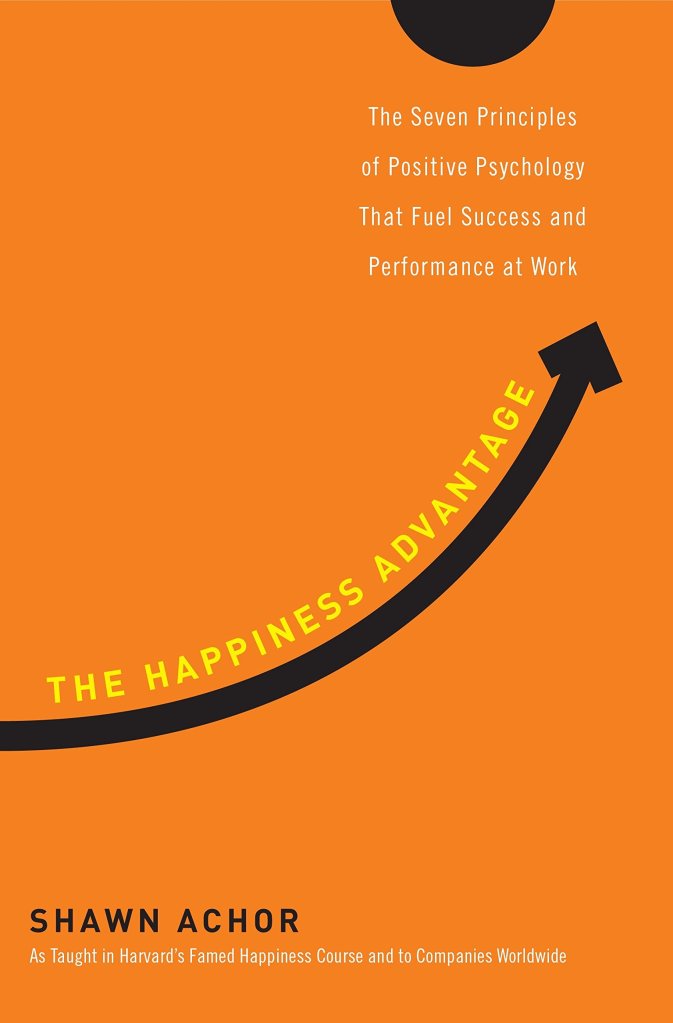
Happiness Advantage by – Paperback Version & Hardcover Version
Writing: ✭✭✭✭✭✭✭ (7/7)
Utility: ✭✭✭✭✭✭✭ (7/7)
🚀 The Book in 3 Sentences
- Most things — whether or not we like it — are actually in our control. The mindset with which we engage life experiences, new intellectual endeavors, and unexpected adversity play a huge role in determining the final outcome. Ultimately, viewing the world through a glass-half-full perspective makes each individual memory and task more fulfilling, memorable, and exciting. In fact, external circumstances — income, family, demographic — are only responsible for 10% of our total happiness.
- In life, most people believe that the key to happiness is success. In reality, though, it is the other way around — happiness fuels success and achievement. Thus, sometimes counterintuitively, rather than optimizing for success itself, optimizing for your own happiness is actually the best path to success.
- When you are happy, you are able to achieve the best version of yourself. The part of your brain responsible for critical thinking, motivation, and creativity literally expand when you are happy. Put simply, you achieve peak form in a state of overwhelming happiness.
🎨 Impressions
- 7/7. Extremely readable and also super high utility. It felt like I could literally apply all of the concepts the moment after I read the chapter.
📖 Who Should Read It?
- Genuinely, everyone. Maybe I am lucky with my selection of books, but each time I digest one of these bad boys, I think about how much different my life would be if I had read the book earlier on.
- It is one of those books that uses cold hard studies to prove that happiness is the gasoline that fuels all aspects of life. Happiness Advantage teaches you that mindset, attitude, and perspective — things that are squarely in your control — can make an immense difference.
☘️ How the Book Changed Me
- I realized how much my mindset matters. I learned that believing in myself, believing that I could grow from an experience, believing that there are things to be grateful for, and believing in others are key to leading a happy life.
- Myself: Just believing that you can finish an assignment will literally make you more likely to finish the assignment. It reminds me of the quote: “whether you think you can or you think you can’t, you’re probably right.” Whenever I am doing something, I always tell myself: yes, you can do it. And even though it seems so minuscule, it truly does make the assignment I’m doing a little easier.
- The 3rd Path: One of my favorites: “You win some, you learn some.” This time, with evidence and studies. In fact, one study suggests that it is NOT the event you experience that dictates whether or not you develop PTSD, but rather, the mindset with which you engage it with. Soldiers, before war, are told they either return normal or with PTSD. Because they are primed to believe there are only two outcomes, hundreds of soldiers come back with PTSD. Turns out, however, that there is actually a third outcome: post-traumatic growth. The most meaningful character development and emotional growth are most frequently experienced during traumatic events. Knowing that every failure is an opportunity for growth is critical to experience PTG — post-traumatic growth. Knowing this, when I was rejected for the first time, I was able to gain perspective and insight from the experience instead of overanalyzing it and drowning in the sadness. “I fail over and over again, and that is why I succeed.”
- Being more grateful: When you constantly practice seeing something, you become better at identifying it. The part of your brain responsible for that specific action actually expands the more you use it. A study was done on people who list three things they are grateful (each day) for a week. Even after a year, these people are statistically happier. Why? Because just that week — a single week — was enough to retrain their brain to pick out the good things instead of the bad thing that each day holds. As a result, I try to list three things I am grateful at the end of each day.
- Encouragement is the best strategy: Treating someone with higher expectations literally makes them more effective. Put differently, choosing to believe in someone can literally make them more competent and intellectually capable of handling any task you throw at them. In fact, a study suggests that when an elementary school teacher was told three of their students had the highest IQ levels, by the end of the year, those three students showed immense academic excellence relative to their peers. The catch? Those three students were randomly selected! The teacher, after being told the information, simply began treating those three students with a higher level of respect, translating to them being more successful. Knowing this, I will definitely be as encouraging as possible. It will make my teammates perform to a higher level, relative to what they would have done otherwise.
- I appreciate my emotional support systems more. I am someone — when faced with immense stress and overwhelming expectations — who cuts himself off from the rest of the world. I leave discord. I delete messenger. Everything is off-limits. I cut off “frivolous” interactions with other people. Why? Because I “don’t have time for those things.” Turns out, according to this book, this is a recipe for disaster. People who isolate themselves from their social circle are more likely to end up depressed, overwhelmed, and unable to meet the expectations put on them. Life is not a sprint, it is a marathon. Entering a period of social isolation to get to the other end is mentally and emotionally exhausting. Problem is, life keeps moving. After your first grind sessions, comes your second, third, fourth. If you always choose to cut everyone else off, you’ll never have time for the people who actually matter, and make life worth living. Your social circle is also what keeps you mentally sane and happy. A study suggests that MORE THAN LITERALLY ANYTHING, INCLUDING INCOME, GPA, SCHOOL, AND EXTRACURRICULARS, social connections have the highest correlation with happiness and success. I will not be “going into grind mode” and deleting messenger anymore. That sounds stupid and is what leads to things like burnout.
- Emotions are extremely contagious. I described this lightly in the first bullet above, but the point is, happiness spills over. Whether that be how you interact with other people (choosing to believe in them / not believing in them) or just how you act in general, your decisions have a huge butterfly effect on everyone else. In particular, a study suggests that the mood of the most outgoing person in your circle will spill over to the rest of the group within the first two minutes of interaction. WOW! This is why a stressful situations can be dealt with much easier when you have someone in the group who is both outgoing and also knows when to zoom out and not take things too seriously. I will be applying this in my group assignments.
✍️ My Top 3 Quotes
- “when three strangers meet in a room, the most emotionally expressive person transmits his or her mood to the others within just two minutes.”
- “when caught in a fire, holding on to others is the best chance we have for successfully finding our way out of the maze.”
- “don’t write a book, write a page…”
- “things do not necessarily happen for the best, but some people are able to make the best out of things that happen.”
- “We are not imprisoned by our circumstances, setbacks, our history, our mistakes, or even staggering defeats along the way. we are freed by our choices.”
Ash’s Almanack Questions
- Wherein your life are you feeling some “learned helplessness?” how could you re-frame the situation from a different vantage point to regain a sense of control?
- relationships. college rejections. Sometimes, I feel like those things define my future. I over-learn the lessons from those experiences and apply them in other fields as well as to future relationships and failures. Understanding that each relationship is different and that one rejection doesn’t define has helped me learn and grow from those memories.
- Are you affected by hedonic adaptation? what about people you know? how can you use that to your advantage – without letting it stand in the way of your happiness?
- I am definitely effected by hedonic adaptation. Even now, after moving to Berkeley and being able to talk to people whenever I want to, my happiness levels have definitely returned closer to the equilibrium of when I stayed home all the time. It has definitely raised to a permanently higher baseline, but the point remains: I am not as happy about being able to talk to people as I used to be. To address, I want to remind myself of how I felt when I was trapped at home without the ability to hang out with my friends. It was so extremely hard.
- It will also allow me to maximize the opposite side of hedonic adaptation — sadness. No matter how existential something may feel in the moment, I know that as long as I approach it in the right way and give myself time to heal, I will return to an equilibrium point where I am able to function and being happy.
 KZ Blogs